15 June 2006
Opdeit


22 May 2006
12 May 2006
Depósito de Chingaderas
05 May 2006
The Strokes
 I don't really know how to start this. I'm still asking myself whether I liked The Strokes' new album or not. I know it's good. But I cannot really find a balance in it. When they first came out with "Is This It?," in 2001, audiences and critics praised them for resucitating the almost dead rock scene. Yeah, there are bands like Radiohead and... well, just Radiohead and perhaps Café Tacvba if you're some kind of music savvy. The Strokes opened the door to many bands that attempted to imitate the style, a trend that today places us in this retro-punkish-super pop era that many were affraid of experiencing again.
There's nothing to be done. "First Impressions of Earth" works only for those hardcore fans of these New Yorkers. This won't be a record to remember nor a record to forget. It's basic function is to illustrate the process the band is going through: maturity. Lacking form and penetration, Julian Casablancas' lyrics show a personal confrontation with critics. "I've got nothing to say/I've got nothing to say/ I'm no in dismay" says the chorus of "Ask Me Anything." And for moments this would seem quite true. Casablancas denotes a struggle in the attempt of finding a better songwriting, a need that his strong and strident vocals, ironically enough, hide many a time.
Guitarrists Alberto Hammond and Nick Valensi deploy their best studio sessions, that ressemble any of their live performances. They sound precise and acute, while bassist Nikolai Fraiture accomplishes once more to settle the sometimes frantic, the sometimes delicate rhythms that characterze him. In terms of execution, the band demonstrates that they might be onto something. Too bad that the once-proclaimed kings of rock showed they were not such.
I don't really know how to start this. I'm still asking myself whether I liked The Strokes' new album or not. I know it's good. But I cannot really find a balance in it. When they first came out with "Is This It?," in 2001, audiences and critics praised them for resucitating the almost dead rock scene. Yeah, there are bands like Radiohead and... well, just Radiohead and perhaps Café Tacvba if you're some kind of music savvy. The Strokes opened the door to many bands that attempted to imitate the style, a trend that today places us in this retro-punkish-super pop era that many were affraid of experiencing again.
There's nothing to be done. "First Impressions of Earth" works only for those hardcore fans of these New Yorkers. This won't be a record to remember nor a record to forget. It's basic function is to illustrate the process the band is going through: maturity. Lacking form and penetration, Julian Casablancas' lyrics show a personal confrontation with critics. "I've got nothing to say/I've got nothing to say/ I'm no in dismay" says the chorus of "Ask Me Anything." And for moments this would seem quite true. Casablancas denotes a struggle in the attempt of finding a better songwriting, a need that his strong and strident vocals, ironically enough, hide many a time.
Guitarrists Alberto Hammond and Nick Valensi deploy their best studio sessions, that ressemble any of their live performances. They sound precise and acute, while bassist Nikolai Fraiture accomplishes once more to settle the sometimes frantic, the sometimes delicate rhythms that characterze him. In terms of execution, the band demonstrates that they might be onto something. Too bad that the once-proclaimed kings of rock showed they were not such.
04 May 2006
Azafrán
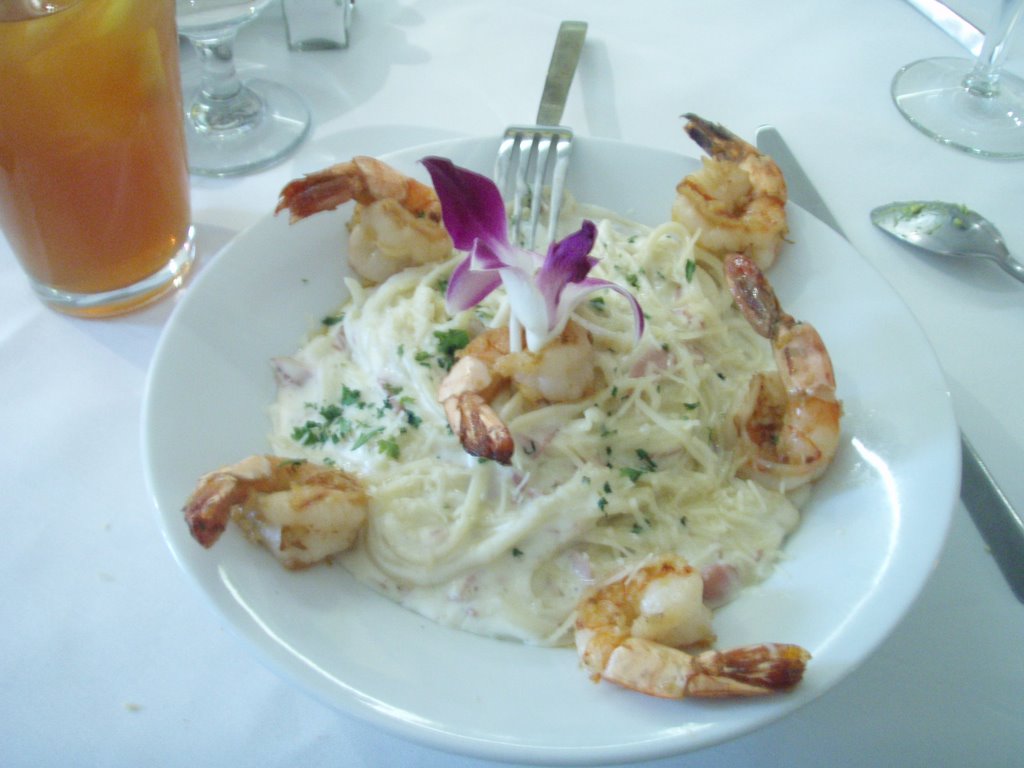 It was too much food. I had more than enough. I kept eating, but I couldn't help it. One of my most hidden inner forces made me devour whatever was on the plate before me.You might think I went to one of those all-you-can-eat joints abounding in our region. It isn't that I am against them; I actually list a couple of them among my favorite food spots. The truth is that I ventured into the world of high cuisine and experienced more than what I expected. My taste, tired defying any logic when it delves into the not-when-sober delicacies of Chicos Tacos, seeked to broaden my perspective and took me to one the best places I've ever eaten: Azafrán.Embeded on the west side of El Paso, Azafrán (Spanish for saffron) especializes on delighting its patrons with international cuisine. A wide array of dishes containing beef, poultry, vegetables and seafood --sometimes all of them combined on the same plate--, entice any palate. Yes, high cousine is synonimous of high prices, but sometimes appearances deceive and one must try something before refusing it.Azafrán makes you walk in perplexed of the extravagant decoration with its aquariums and waterfalls on the wall.The menu, as mentioned before, offers anything from Mexican dishes, pasta, salads and many other things, with an average price of $18. This is not a place in which you cannot even pronounce what you're ordering. The list of dishes tells you exactly what you're going to eat, mouthwatering combinations that make the minde fly away from the regular "to go" combos with extra large fries and soda available at any junk station. The food is so delicious at Azafrán that the "wallet-ache" vanishes before you notice. After choosing my seat and getting iced tea($5) and water, Tracy, my server, waited patiently for my order. She helpped all along the way with suggestions and remarks on how the cheff prepares every single portion of food. The chicken with marinated artichoke hearts, shrimps, escalop and mushrooms tempted me, but my pasta heart took over me. I ended up ordering linguini with shrimps and prosciutto in a vodka sauce ($15). But before I decided for this dish, I look at the appetizers section on the menu and opted for the interesting shrimp quesadillas ($12). I didn't know what I was going to get. The cheese and shrimp mixture proved to be an excellent companion for the red tortillas and the piquant guacamole side that came with them. The delicate assortment of red triangles adorned the plate in such an artistic manner, that it took me long before daring to reach in for the first quesadilla. Tracy recommended that I should also try the home-baked bread with sesame seeds and cream that would join my main order. Azafrán service is expedient. I was bearely thinking of timing the food, when Tracy came opening space for my plate and asking me if I needed anything else. I was perplexed (and half full already). But I acquiesced to a glass of wine. When the wine menu came I searched for any of the economic and practical Chilean brands, finding the excellent Reserva Santa Rita sold by the bottle ($24). I just wanted a glass. But far from souring my meal, I digested this episode sampling a glass of Altus ($5), an Argentine Merlot. Its strong aroma and dry flavor were proof enough of its place among the wines of the Azafrán house.
The prosciutto gave the dish its strong flavor, while the shrimp proved once more to be the perfect companion for the pasta. The tenuous flavor of the vodka sauce splashed my lips, and I caught myslef dripping it several times onto my blanket.
After a few stops along the way, I finished my linguini just to be tempted once more by Tracy. "You should try our desserts," she almost ordered me; and I, almost in a state of candid oblivion, accepted without any hesitation.The dessert menu displays sweet delicacies like chocolate bathed strawberries, mouse, and flan napolitano. My taste and imagination were shaken by the cheesecake with pecan crust ($7), perhaps the one with the simplest name, but the also the one with the highest remarks from Tracy. "We whip our cheesecake to point of
It was too much food. I had more than enough. I kept eating, but I couldn't help it. One of my most hidden inner forces made me devour whatever was on the plate before me.You might think I went to one of those all-you-can-eat joints abounding in our region. It isn't that I am against them; I actually list a couple of them among my favorite food spots. The truth is that I ventured into the world of high cuisine and experienced more than what I expected. My taste, tired defying any logic when it delves into the not-when-sober delicacies of Chicos Tacos, seeked to broaden my perspective and took me to one the best places I've ever eaten: Azafrán.Embeded on the west side of El Paso, Azafrán (Spanish for saffron) especializes on delighting its patrons with international cuisine. A wide array of dishes containing beef, poultry, vegetables and seafood --sometimes all of them combined on the same plate--, entice any palate. Yes, high cousine is synonimous of high prices, but sometimes appearances deceive and one must try something before refusing it.Azafrán makes you walk in perplexed of the extravagant decoration with its aquariums and waterfalls on the wall.The menu, as mentioned before, offers anything from Mexican dishes, pasta, salads and many other things, with an average price of $18. This is not a place in which you cannot even pronounce what you're ordering. The list of dishes tells you exactly what you're going to eat, mouthwatering combinations that make the minde fly away from the regular "to go" combos with extra large fries and soda available at any junk station. The food is so delicious at Azafrán that the "wallet-ache" vanishes before you notice. After choosing my seat and getting iced tea($5) and water, Tracy, my server, waited patiently for my order. She helpped all along the way with suggestions and remarks on how the cheff prepares every single portion of food. The chicken with marinated artichoke hearts, shrimps, escalop and mushrooms tempted me, but my pasta heart took over me. I ended up ordering linguini with shrimps and prosciutto in a vodka sauce ($15). But before I decided for this dish, I look at the appetizers section on the menu and opted for the interesting shrimp quesadillas ($12). I didn't know what I was going to get. The cheese and shrimp mixture proved to be an excellent companion for the red tortillas and the piquant guacamole side that came with them. The delicate assortment of red triangles adorned the plate in such an artistic manner, that it took me long before daring to reach in for the first quesadilla. Tracy recommended that I should also try the home-baked bread with sesame seeds and cream that would join my main order. Azafrán service is expedient. I was bearely thinking of timing the food, when Tracy came opening space for my plate and asking me if I needed anything else. I was perplexed (and half full already). But I acquiesced to a glass of wine. When the wine menu came I searched for any of the economic and practical Chilean brands, finding the excellent Reserva Santa Rita sold by the bottle ($24). I just wanted a glass. But far from souring my meal, I digested this episode sampling a glass of Altus ($5), an Argentine Merlot. Its strong aroma and dry flavor were proof enough of its place among the wines of the Azafrán house.
The prosciutto gave the dish its strong flavor, while the shrimp proved once more to be the perfect companion for the pasta. The tenuous flavor of the vodka sauce splashed my lips, and I caught myslef dripping it several times onto my blanket.
After a few stops along the way, I finished my linguini just to be tempted once more by Tracy. "You should try our desserts," she almost ordered me; and I, almost in a state of candid oblivion, accepted without any hesitation.The dessert menu displays sweet delicacies like chocolate bathed strawberries, mouse, and flan napolitano. My taste and imagination were shaken by the cheesecake with pecan crust ($7), perhaps the one with the simplest name, but the also the one with the highest remarks from Tracy. "We whip our cheesecake to point of  puddin," she said.When she brought it, I tasted the most exquisite cheesecake ever. Its jelly consistency played with the pecans to create a glorious ending to my sensorial feast. I took my time, though I was already running late. But if there's a cheesecake that deserves my time, this was the one. Sweet, solid and placid delight that I munched on tranquilly, you gave me the key to lock the memory of one of the best meals I've ever had!When the check came, Tracy recommended me to come back on Sunday. "We have a buffet and you can try all our dishes from $17."Well, I might be adding another all-you-can-eat place to my list.
Average price for a meal for two: $70
Location: 5411 N. Mesa
Telephone: 581-8100.
Specialty: International Cuisine
No reservations needed, unless special occasions (Mother's Day).
Live music every Thursday night.
puddin," she said.When she brought it, I tasted the most exquisite cheesecake ever. Its jelly consistency played with the pecans to create a glorious ending to my sensorial feast. I took my time, though I was already running late. But if there's a cheesecake that deserves my time, this was the one. Sweet, solid and placid delight that I munched on tranquilly, you gave me the key to lock the memory of one of the best meals I've ever had!When the check came, Tracy recommended me to come back on Sunday. "We have a buffet and you can try all our dishes from $17."Well, I might be adding another all-you-can-eat place to my list.
Average price for a meal for two: $70
Location: 5411 N. Mesa
Telephone: 581-8100.
Specialty: International Cuisine
No reservations needed, unless special occasions (Mother's Day).
Live music every Thursday night.
23 April 2006
A Tree of LIfe

Sunday's sun comes down despacio, despacito, all along Juárez-El Paso. Ramón and I make the trip teenagers and crazy gabachos do across the river to get some fun. A light breeze welcomes us on the Mexican side of the Río Grande; long shadows walk back and forth, up and down an orange-and-red Juárez Avenue: the strip. It is just the ideal atmosphere to forget the tedious week approaching and the unbearable lightness of being a routine muncher.
Ramón follows me down the strip. We walk by forgotten pachucos now turned into shoeshines and street musicians. We talk about books and hitch-hiking Jews, southbound trips and Mexican roads—the memories of old—while the smell of all the stale drink-and-drown fiestas permeates through the gate of every single joint. Juaritos says hello and "come on, guys, we have fine and sexy ladies waiting for you," says the man with the neon-lighted smile that stands at every single entrance. But we ain't looking for any of those caves. Ours is an upward trip, in search the sacred root.
Juárez hasn't changed a bit: It's still dying. It's a big town afflicted by the same corruption and a great deal of the violence plaguing the entire México-U.S. border. People are friendly nonetheless. The corners are inhabited by taxi men offering "chicas" (girls) the same way they offer a ride. People are friendly nonetheless. Many dru stores offer "Medecinas baratas" (cheap medicines), the of late number one spot for tourists.
One can feel a sense of history trudging around downtown Juárez. Away from the fluorescent signs and the drunken aroma, few bars keep the revolutionary air that hosted Mexican troops, Revolutionary soldados, and spies during the Revolutionary War of 1910. They can tell a story that no one recalls. Jack Johnson's fight is gone. Prohibition is almost a century-old tale; the gringos came, as they still come, to drown searching for the Mexican Dream. But they cannot find what's been right beneath their noses, a drink made for the wandering throats of women and men with a taste for the border elixir: Chuchupastle.
El Arbolito

No one is certain about how and when it happened, but some 60 years ago downtown Juárez woke up underwater. Three feet of water made of "El Arbolito" (The Small Tree), a small place embeded right in front of the Plaza del Mariachi on Mariscal Street, a residual water pool. Today "El Arbolito" is receving more water again. Cracks on the ceiling leak some water down to the buckets lying on the floor. Nothing to worry about. Two guys are already drinking there when Ramón and I walk in.
"Buenas tardes, jóvenes; a ver sus i.d.'s, por favor, muchachos," says Conejo(Rabbit), the barman who probably was a teenager when the water came long ago.
Our sight takes a tour from left to right resting on the old chairs, mesas and stools scattered across the place and facing the bar at the bottom. The wooden "barra" hosts miniature versions of a Mayan pyramid and a Virgen de Guadalupe image, old calendars, glasses of various shapes and sizes, and a grey dust-covered register. Right on top of the register, a phallic device dwells mysteriously. "La maraca" has a thin stick some 10 inches long and a sort of balloon at its end. No one can touch it. The word at "El Arbolito" is that "la maraca punishes those people who claim to have no money to pay for their drinks." Conejo says it works. "Nomás uno se nos fue una vez sin pagar."
A Julio César Chávez photo hangs from the wall at the left end of the massive piece of furniture. Tequilas, whiskeys and all the other sorts of liquors align together on the main shelf. Beers rest inside an old fridge right beneath the assortment of bottles. The place is far from being your typical hip-hop club or even an American curious "Mexican classic" cantina. The cracked and badly repaired walls host a horde of hipster college students that pack the place up almost every Friday on their way to some of the "fancier" places. On most days a keyboard-guitar duo accompanies the cheer and laughter of those who gather at El Arbolito. On special occasions (almost every Monday) there's "botana" (snacks) for the early birds. El Arbolito's fame brings people in every single day searching the home place to one of the unknown delicacies of Juárez. But the biggest nicety that brought Ramón and me here is Chuchupastle.
El Chuchu
The infusion of Tequila and the root of the Osha plant (Ligusticum porteri)*, Chuchupastle is a strong beverage. Its savor is something between celery and the most pleasant corner of burning Hell. Only a few spots in Juárez sell this liquor in its most original form, and El Arbolito is thought to be its original home. El Arbolito's mix is made with regular Tequila Orendain. The clear liquor acquires a yellowish color thanks to the root's "flavorful and medicinal infusion," said University of Kansas' Botanist Quinn Gabriel Long.
"It is much like many bars in the US make trendy vodka infusions with everything from pomegranate to cucumber," he said.
Ramón says he's thirsty. I just want to drink. The first "chuchu" comes in the hands of Conejo. He serves it in a small shot glass, perhaps a warning of its strength, perhaps a limitation of its enchanting bouquet and strong body. One has to sip it like a fine wine, says the popular word about Chuchupastle. No one stands straight after four of these shots, and I know from experience. As I downed the Chuchu, I feel its grassy flavor bathe my mouth. No sooner had I felt this than a parsimonious burning begins crawling up my body as the Chuchu travels down. It's like realizing I have lungs, arms, feet and hair for the first time. Ramón gasps with his eyes wide open after his first drink. There will be a couple more during the night. A cold beer is a good companion for "el chuchu." Any fría will do. All beers cost 10 pesos, the same as chuchu. And we choose to have "Indio," a dark bock with smooth composition and taste. Just after a few minutes, Ramón and I start talking about whatever comes to our mind. He says to know a guy that did "this" and "that." I answer that something similar happened to a friend of mine. We look at each other with suspicion. Perhaps we revealed too much. Perhaps we need to sip a little more "chuchu."
Almost two hours go by and we are drinking our third round. We keep on talking about "our friends'" stories. Sergio, the son of the late owner, a mature man of about 55 years, plays an Antonio Aguilar cassette on his stereo and Ramón and I sing the little lyrics we know. "Normally, we have musicians come and play all those sad rancheras to cheer people up. Nomás que they didn't come today... They might be drunk," he says.
We had our fifth chuchu a few minutes after. All of a sudden Ramón recalled he had a wife and child to go see. I just laughed and asked for another one. Ramón dragged me out. We finally walked back, passing right next to the prostitutes, travesties and strippers on their way to work.
*Special thanks to University of Kansas Botanist Gabriel Quinn for his knowledge and help.
15 April 2006
13 April 2006
Dylan in El Paso
 Bob Dylan does as he pleases. And that's what happened last nitgh when he performed yesterday a country-blues version of some of his classics before an El Paso audience at the Don Haskins Center.
With a majestic red velvet courtain in the background the poet-musician entered the scenario a few minutes before 9 p.m. to play "Maggie's Farm," the old-time favorite from the "Bringing it all Back Home" album.
The first half of the show went on with Dylan and his superb band playing "She Belongs to Me,"Lonesome Day Blues," "Queen Jane Approximately," "Till I Fell in Love with You" and "It's Alright, Ma (I'm Only Bleeding)."
Clad in black, the 1997 and 1999 nominee continued
Bob Dylan does as he pleases. And that's what happened last nitgh when he performed yesterday a country-blues version of some of his classics before an El Paso audience at the Don Haskins Center.
With a majestic red velvet courtain in the background the poet-musician entered the scenario a few minutes before 9 p.m. to play "Maggie's Farm," the old-time favorite from the "Bringing it all Back Home" album.
The first half of the show went on with Dylan and his superb band playing "She Belongs to Me,"Lonesome Day Blues," "Queen Jane Approximately," "Till I Fell in Love with You" and "It's Alright, Ma (I'm Only Bleeding)."
Clad in black, the 1997 and 1999 nominee continued
11 April 2006
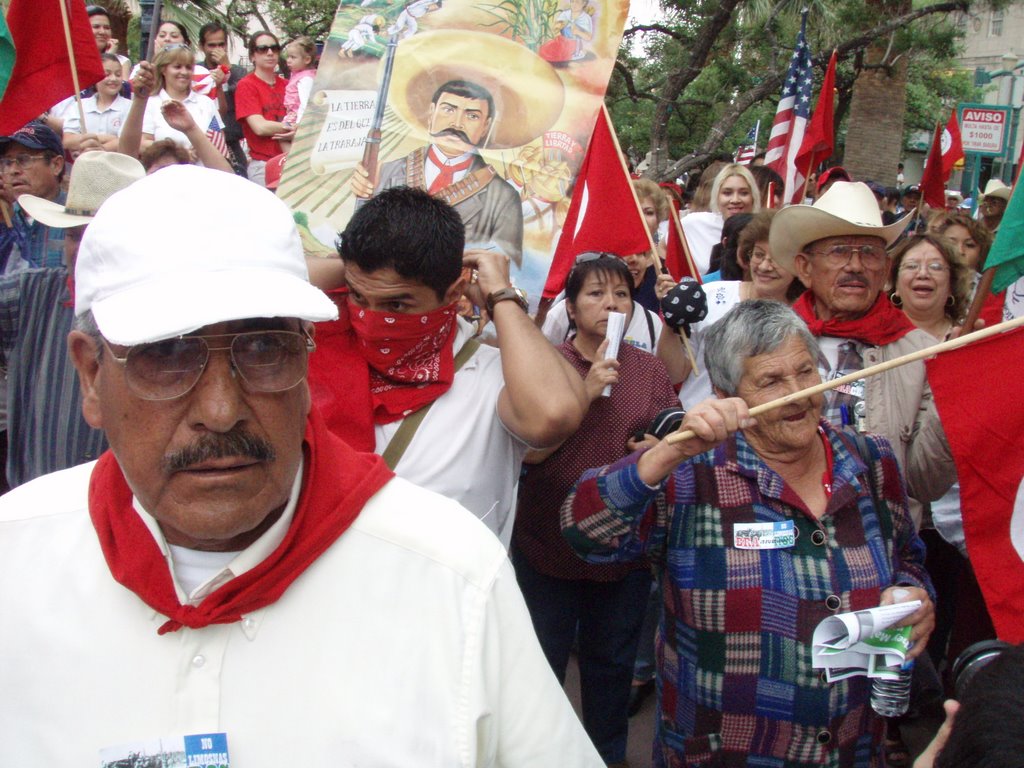 Apenas un par de miles de personas se reunieron ayer en el centro de la ciudad buscando impulsar una reforma migratoria que conduzca a una eventual regularizacion de millones de inmigrantes.
En el evento no estuvieron presentes los multitudinarios grupos estudiantiles que apenas hace una semana y media hicieron sentir su presencia y le dieron cuerpo al contingente que marcho por las calles de El Paso.
Sin embargo, grupos anti-inmigrantes, en los que figuraban personas de origen latinoamericano, estuvieron por momentos al margen, por momentos encarados con los manifestantes que claramente los superaban en numero.
La policia contuvo pequenos conatos de bronca que se dieron entre los grupos antagonistas.
Matachines, estudiantes, personas en sillas de ruedas y los incansables Braceros se apropiaron de la Plaza de los Lagartos minutos antes de las 4 de la tarde.
Apenas un par de miles de personas se reunieron ayer en el centro de la ciudad buscando impulsar una reforma migratoria que conduzca a una eventual regularizacion de millones de inmigrantes.
En el evento no estuvieron presentes los multitudinarios grupos estudiantiles que apenas hace una semana y media hicieron sentir su presencia y le dieron cuerpo al contingente que marcho por las calles de El Paso.
Sin embargo, grupos anti-inmigrantes, en los que figuraban personas de origen latinoamericano, estuvieron por momentos al margen, por momentos encarados con los manifestantes que claramente los superaban en numero.
La policia contuvo pequenos conatos de bronca que se dieron entre los grupos antagonistas.
Matachines, estudiantes, personas en sillas de ruedas y los incansables Braceros se apropiaron de la Plaza de los Lagartos minutos antes de las 4 de la tarde.
09 April 2006
06 April 2006
Reaparece Mattox en el CMA
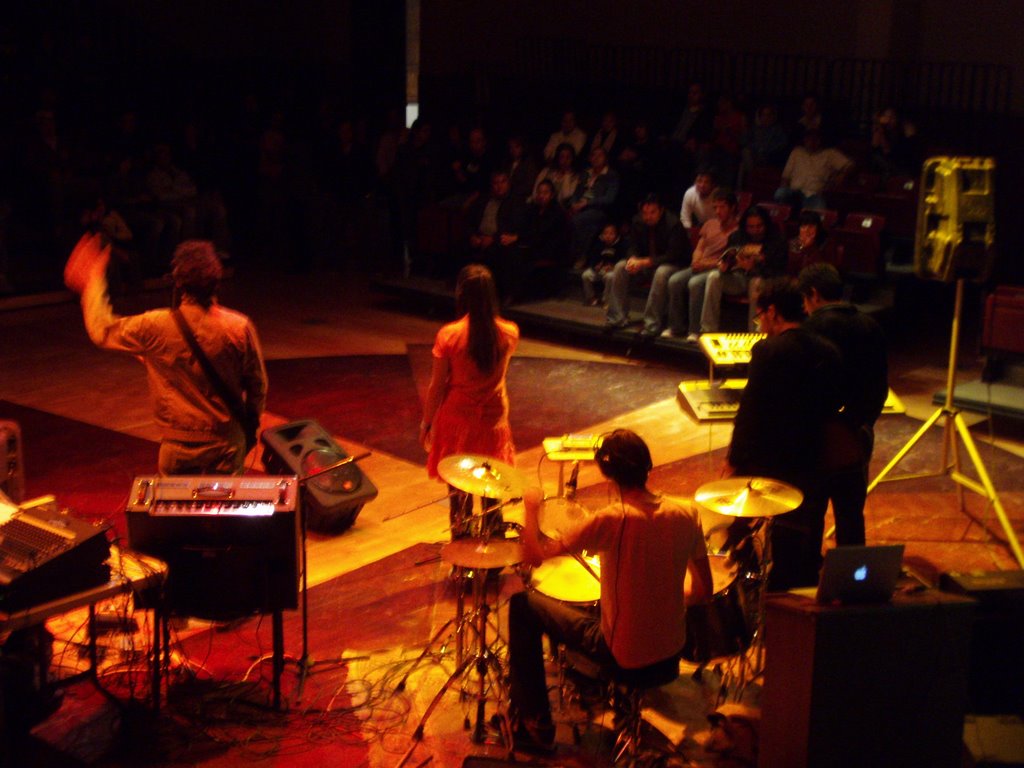 Mattox, banda de rock electrónico, presentó en el Centro Municipal de las Artes al menos un par de nuevas canciones en evento previo al lazanmiento de su primer disco, del cuál no revelaron su nombre.
La noche fue íntimia. En show de una hora la banda mostró a las 150 personas que acudieron sus argumentos para seguir vigente en la música.
El concierto se dio en el marco de la recepción para la apertura de la muestra de pintura "Un Ojo de la Cara" de Carlos Montes, que reune más de 15 obras, las más recientes del artista.
Los músicos dieron las gracias al público que los aplaudió luego que se anunció el inicio del evento para comenzar a tocar un instante después.
Mientras los ritmos electrónicos rockeros sonaban, cristales estrellados en el piso, a unos metros de la voz Diana Batista, recordaban que se contaba con el riesgo de que al menos parte de la iluminación.
Mattox, banda de rock electrónico, presentó en el Centro Municipal de las Artes al menos un par de nuevas canciones en evento previo al lazanmiento de su primer disco, del cuál no revelaron su nombre.
La noche fue íntimia. En show de una hora la banda mostró a las 150 personas que acudieron sus argumentos para seguir vigente en la música.
El concierto se dio en el marco de la recepción para la apertura de la muestra de pintura "Un Ojo de la Cara" de Carlos Montes, que reune más de 15 obras, las más recientes del artista.
Los músicos dieron las gracias al público que los aplaudió luego que se anunció el inicio del evento para comenzar a tocar un instante después.
Mientras los ritmos electrónicos rockeros sonaban, cristales estrellados en el piso, a unos metros de la voz Diana Batista, recordaban que se contaba con el riesgo de que al menos parte de la iluminación.31 March 2006
Marchers Rally Against Bill

Six thousand marchers, the majority energetic high school students, cantered, jumped, cheered, and yelled rebellious chants as they marched Friday down Oregon St. in downtown El Paso to bolster opposition to a proposed federal immigration reform law.
Lagging behind, the furrowed faces of Braceros, the drum of the Matachines dancing and praising their Virgen de Guadalupe (the one who never fails!) and the red flags of the Chicanos trooped toward the Center for Border Farm Workers, they're voices also resounding with pounding catchy mottos as "¡Si se puede!" under the Spring's first hot sun.
The not so typical image not only mimicked the previous two days in which local high school students have made, or at least attempted, several walkouts, but also ressembled the national protests that during the last two weeks have aimed their efforts to call the attention of the government and fight back the proposed HR4437 (AKA Sesenbrenner Bill).
Perhaps just a few actually knew what was going on. Cell phones in hands, a great number of the adolescents were just fulfilling their will of being part of something big, the "real thing," as some local media dubbed the protest. And the critics may be right. One could see one too many trendy-clad students summoning others that were taking advantage of the walkout to go shopping or remain idle somewhere else.
And though all the organizers coincided that many of the students protesting thoughout the week couldn't "verbalize" the specifics of the proposed law, they assured more than once that this kind of behavior shows a different attitude in the younger generations.
"The proposed HR4437 has awakened people in a way that have not always been seen, it's specially important to see young people participate in events like this," Fernando Garcia with the Annunciation House said.
One of the "awakened" teens is José Negrete, a 15-year-old Jefferson High student who megaphoned his messages ever since the rally's very beginning.
"I'm here to support all the immigrants that come to this country to work and better their lives," he said.  Before the threat of being "punished" by school authorities, Negrete said that it was more important to back the effort his "grandparents made when they came to this country; my abuelo came in WWII to work the fields of this country... I'm proud of what they've done for us," he said.
And to show his pride Negrete lead a nurtured group of students that gathered minutes after 10 a.m. in San Jancinto Plaza, just as some politicians were calling the multitude to "remember" the leaders who showed up to support the cause, a probable commercial for the electoral times coming later this year.
Before the threat of being "punished" by school authorities, Negrete said that it was more important to back the effort his "grandparents made when they came to this country; my abuelo came in WWII to work the fields of this country... I'm proud of what they've done for us," he said.
And to show his pride Negrete lead a nurtured group of students that gathered minutes after 10 a.m. in San Jancinto Plaza, just as some politicians were calling the multitude to "remember" the leaders who showed up to support the cause, a probable commercial for the electoral times coming later this year.
18 March 2006
2
Ahora que me acuerdo...
Ver vomitar a Verónica fue... No sé... Creo que no lo esperaba. Obtusa contra la pared, colocaba la cabeza entre sus brazos y dejaba caer un chorro rojo-casi-morado con cada pujido hediondo. Apenas minutos antes Germán había sacado la cabeza por una de las ventanas de la casa para basquear en el pasto al ritmo de la burla de "La Flakita". Pero ahora era ella, "La Flakita", la que, después de unos cuantos fumes al gallo, a la pipa, a la piedra y al tabaco, se doblaba reconociendo que "t'was too good to be true, güey; ¿pa' qué me reí del "Flako"? See, el vato... ... ... ¡Damn, ya las di...!"
Apenas acababa de decir eso cuando se formó una pequeña cascada que caía de su boca a la inodoro. Lo estaba sacando todo. Según sus cálculos, fueron dos botellas. La neta era que ella perdió la cuenta a la segunda botella, su cuerpo petite apenas resistió la vorágine alcohólica.
El alemán me dijo que quería fumar "pashtao". Lo mandé a la verga; siempre anda mendigando el viaje según de lo que traiga antojo. Su morra de antes le compraba todo. A veces tenía tanto que hasta se ponía a aventar toda la mierda que le sobraba. Pero al alemán se le hizo demasiado descaro, según contaron, y dejó a la morra que le compraba todo y que le daba el culo. El alemán sacó su espíritu teutón y optó por esforzarse para conseguir sus vicios. Su calidad de extranjero con acento marcado le daba cierta virilidad que le facilitaba "der panochen". Pero eran muy pocas las que se querían aventar a mantenerle el "pary" al vato. A veces escribía algo para las revistas locales. Cosas muy malas pero que con llevar el apellido Franzerbahüer en la firma se cotizaban como "la vanguardia" del pensamiento europeo radicando en "nuestra tierra", así le dicen siempre, ¿no? Nuestra Tierra. Nuestro País. Nuestra Casita.
Pues a "la vanguardia" le pagaban bien sus colaboraciones; entre más malas, más feria le daban. O al menos eso parecía. Herr Franzerbahüer se había hecho de unos contactos en la uni cuando llegó recién de su país. Vino a J____z a aprender arte chicano y a hacer un estudio sociológico de una frontera tan "kountrrrasshtante" como la nuestra.
Le pregunté si ya había terminado. "No... ¡guaaak!...no sé... ¡Pinche peda, güey!" La miré. Escupió un chorrito más tras un pujido corto y apretado. Unas gotas más brincaron de la taza y mancharon su pantalón y los zapatos que estrenó esa noche. Se quedó recargada contra la pared. Era como si se le estuviera viniendo encima el muro y ella lo quisiera parar con sus bracitos blancos. Ya me iba a reir, pero como que empecé a no sentir nada. Yo estaba acostado en el aire. Así parado. Levitando. Mis pies flotando en en la nada un tantito pa' no sentir el piso y la corriente que soplaba su entrada desde la puerta detrás de mí. Era como si fuera un colchón que me tenía suspendido-acostado justo debajo del marco de la puerta. Esa madre estaba buena. Pero no sé cuál de todas las madres que me metí. Mis cocteles de placer no siempre son... placenteros. A veces me duele el pecho. A veces me tiembla la cabeza. A veces se me borra el disco.